
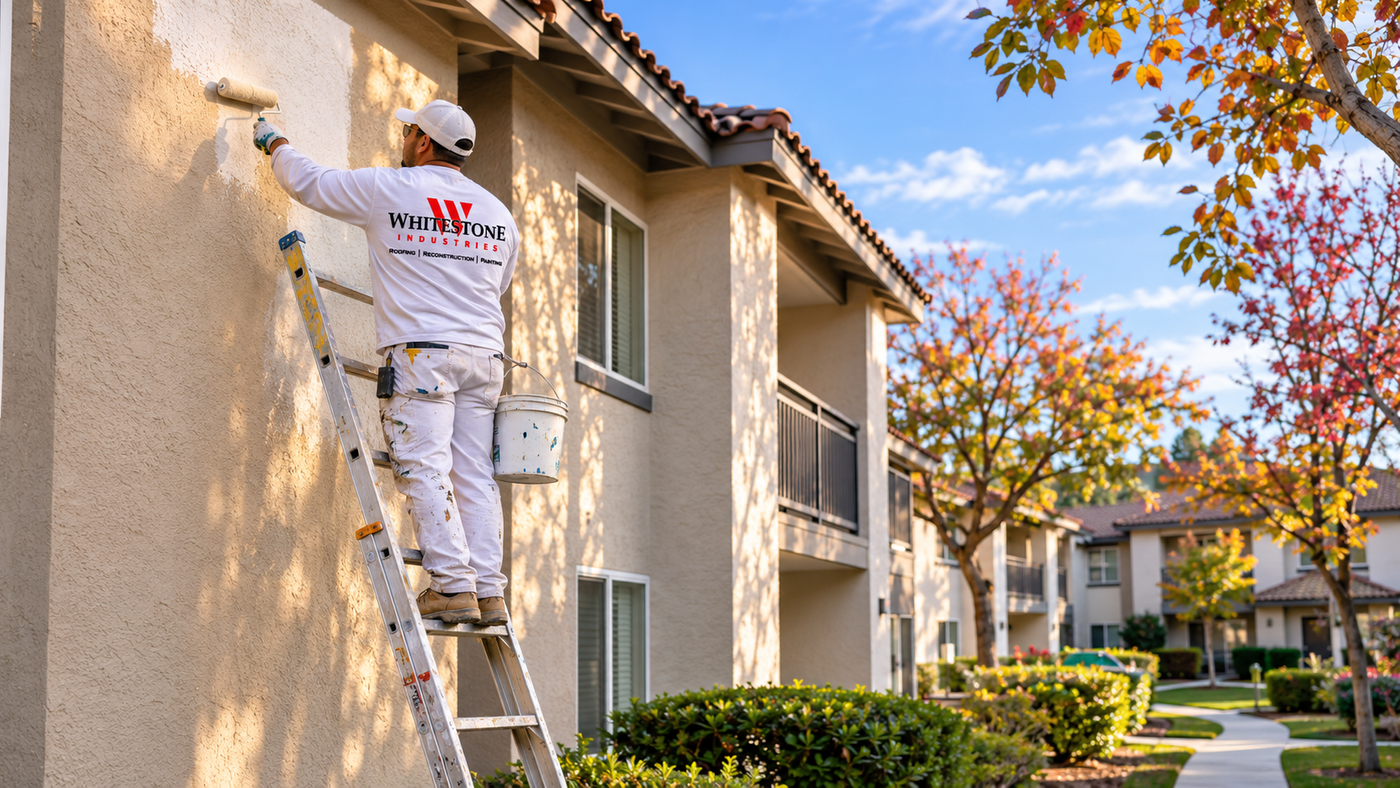
Ask most homeowners or HOA board members when they plan to schedule their exterior painting project, and the answer is almost always the same: spring or summer. Warm weather, dry conditions, long days — it seems like the obvious choice.
But in California, that conventional wisdom leaves a significant opportunity on the table. For property owners in the Central Valley and much of Southern California, fall and winter are not just acceptable times to paint — in many ways, they're ideal.
Here's what most people don't know about exterior painting in California's off-season, and why scheduling your project between October and February might be one of the smartest decisions you can make.
The Myth of Summer as "Painting Season"
The idea that painting requires warm, sunny weather comes from climates where it's actually true — the Pacific Northwest, the Northeast, the Upper Midwest. In those regions, exterior painting really is constrained to a few months when temperatures are above freezing and rain isn't a constant concern.
California's climate is fundamentally different. In the Central Valley and inland Southern California, the problem isn't too little warmth — it's often too much of it. And the summer painting season that everyone competes for comes with real drawbacks that most property owners never consider.
Why Summer Isn't Always the Best Time to Paint in the Central ValleyExtreme Heat Creates Application Challenges
Exterior paint has an optimal application temperature range — typically between 50°F and 90°F. In Bakersfield and the broader Central Valley, summer surface temperatures on south and west-facing walls can reach 130°F to 150°F or higher during peak afternoon heat.
When paint is applied to an overheated surface, it can dry too quickly — before the film has time to properly flow, level, and bond to the substrate. This rapid solvent flash-off can compromise adhesion, cause lap marks where wet and dry edges meet, and reduce the overall film integrity of the coating. Quality painters work around this by limiting application to early morning hours in summer, but it adds complexity and reduces daily production.
UV Stress on Fresh Coatings
Freshly applied paint is at its most vulnerable in the hours immediately after application, before the film has fully cured. During a California summer, those early hours of cure happen under intense UV radiation and high heat — conditions that stress the film at exactly the moment it needs to stabilize.
A coating that cures in moderate fall temperatures — without the UV assault of a July afternoon — has the opportunity to develop full film integrity before it's tested by the elements.
Peak Season Means Peak Competition
Summer is when everyone wants their painting done. HOA projects, commercial repaint programs, and residential painting all compete for the same contractor availability during the same narrow window. That competition translates into tighter scheduling, longer lead times, and in some cases, higher pricing as contractors manage heavy demand.
A property owner who plans a fall or winter project isn't fighting for a spot on a booked-out schedule. They're working with a contractor who has availability, attention, and flexibility.
Why Fall and Winter Work Well for California PaintingTemperatures Are Often Ideal
For most of the Central Valley and Southern California, fall and winter temperatures are textbook painting conditions. Daytime highs in the 55°F to 75°F range are common from October through February — consistently within the optimal application window for most quality exterior coatings.
These moderate temperatures allow paint to cure at the pace it was designed for: not too fast, not too slow. The film has time to flow, level, and bond properly before it sets. The result is better adhesion, more uniform film build, and a finish that's more durable over its service life.
Low Humidity Supports Proper Cure
Exterior coatings need to be applied to a dry surface and need reasonable humidity conditions to cure correctly. California's dry season — which extends well into fall and sometimes through winter in inland areas — provides consistently low ambient humidity that is excellent for paint application and cure.
The window between rain events in a typical Central Valley winter is usually days to weeks, not hours. A qualified contractor monitors the forecast and schedules work around any rain events, taking advantage of the extended dry periods that California's Mediterranean climate provides.
Surfaces Are More Stable
Summer heat causes exterior surfaces to expand, contract, and stress — particularly around windows, door frames, and wall penetrations where caulking is critical. Applying caulk and paint to surfaces that are thermally stable, rather than surfaces cycling through extreme temperature swings, results in better initial bond and longer-term performance.
Cooler, stable surface temperatures also mean that the primer and paint applied to repaired areas — stucco patches, wood repairs, sealed cracks — have an easier time achieving the mechanical bond the coating needs to perform over the long term.
You Get Better Contractor Attention
This is a practical point that experienced property managers understand well: a contractor who isn't juggling a full summer schedule gives your project more consistent attention. Crew continuity, superintendent oversight, and project management quality all tend to be better when a contractor isn't stretched across six simultaneous jobs during peak season.
For HOA projects with complex logistics — multiple buildings, occupied units, resident communication requirements — that additional attention can make a meaningful difference in how smoothly the project runs.
What to Watch for in Fall and Winter Painting
None of this means that painting in fall and winter is without considerations. A qualified contractor manages these proactively:
Rain windows. Paint and primer cannot be applied to wet surfaces, and fresh coatings need time to cure before rain exposure. In practice, this means monitoring forecasts closely and scheduling application days with adequate dry time before any predicted rain. In most California winters, this is manageable — the dry periods between rain events are typically long enough to complete sections of work without issue.
Overnight temperatures. Most quality exterior coatings have a minimum application temperature — typically 35°F to 40°F — and require that temperatures stay above that threshold for several hours after application while the film cures. In the Central Valley, overnight lows can approach or occasionally drop below this range in December and January. A good contractor accounts for this in scheduling, applying coatings in the morning to maximize cure time before temperatures drop at night.
Surface dryness after rain. After any rain event, surfaces need adequate time to dry before coating application resumes. In California's low-humidity environment, this drying period is typically shorter than in humid climates — but it still needs to be respected. Rushing back to work before surfaces have dried is a shortcut that compromises coating adhesion.
A contractor who takes fall and winter painting seriously manages all of these factors as a matter of professional practice — not as obstacles, but as conditions to be planned around.
Who Benefits Most From Off-Season Painting
HOA communities with large-scale exterior projects. Painting an HOA community with dozens of buildings is a multi-week project. Scheduling it for fall or winter means better contractor availability, more consistent crew, and the ability to take advantage of ideal curing conditions throughout the project — rather than racing to complete sections before afternoon heat sets in.
Commercial property owners. Businesses that want to minimize disruption to tenants or operations often find that fall and winter scheduling allows work to proceed during lower-traffic periods, with less interference with business activity.
Homeowners who want to get ahead of spring. Fall and winter painting means your home is freshly painted and fully protected heading into the rainy season — not scrambling for a contractor in April when everyone else is trying to book the same spring window.
Properties with deferred maintenance. If your building's exterior has been deferred and water damage is a risk, waiting until summer to paint is not a neutral decision — it means another rainy season without protection. Getting the work done in fall or early winter addresses the exposure before it becomes a problem.
The Whitestone Approach to Year-Round Exterior Work
At Whitestone Industries, we paint year-round in California — because the climate supports it and because our clients' needs don't follow the seasonal calendar that painting myths are built around.
We monitor forecasts, plan around rain windows, and schedule application to take advantage of optimal curing conditions throughout the fall and winter months. We've completed large-scale HOA repaints, commercial property exteriors, and residential projects across the Central Valley during every month of the year — and we know how to manage the variables that come with off-season work.
If your property has a painting project that needs to happen, don't assume you need to wait until April. The window is open now, contractor availability is better than it will be in spring, and the conditions are often better than you'd get in July.
Contact Whitestone Industries today to discuss your fall or winter painting project — and find out how we can get your property protected before the next rainy season or ready for spring.
Whitestone Industries serves HOAs, multifamily property owners, and commercial properties throughout California with commercial and multi-family services, commercial roofing, SB 326 and SB 721 consulting and repairs, construction defect and destructive testing, and residential services. Call us at 888-567-2234 or visit wsindustries.com.