
If you manage or own a multifamily property or commercial building in California's Central Valley or Southern California, you already know what summer feels like. Temperatures routinely climb past 100°F in Bakersfield, Fresno, and the Inland Empire — and they stay there for weeks at a time.
What you might not fully see is what that heat is doing to your building while it bakes.
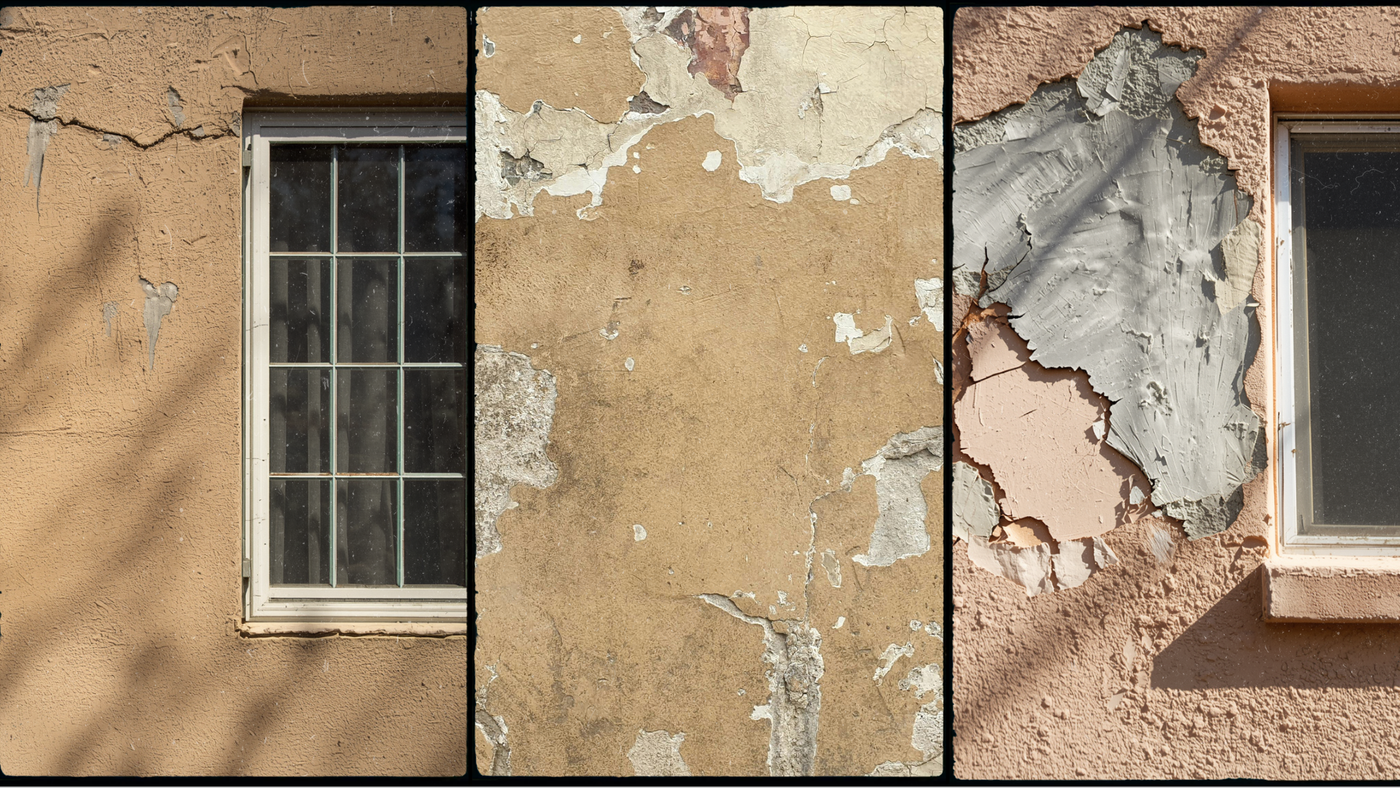
Every summer, UV radiation, thermal expansion, and prolonged heat exposure quietly accelerate the breakdown of the materials protecting your building's exterior. Paint fades and chalks. Caulking shrinks and cracks. Waterproofing membranes blister and peel. Stucco develops hairline fractures that let moisture in the moment the rains return.
The damage is gradual — which means it's easy to overlook until it becomes expensive. Here's what's actually happening to your building's exterior during a California summer, and what proactive property managers and HOA boards do to stay ahead of it.
How Summer Heat Breaks Down Your Building's Exterior
Paint and Coatings: UV Degradation Is Relentless
Exterior paint does a lot more than make a building look good. It acts as a barrier against moisture, UV radiation, and airborne contaminants. But California's intense sun is hard on even high-quality coatings.
UV radiation breaks down the binder that holds paint together, causing the surface to oxidize and chalk. You'll notice this as a white, powdery residue that wipes off on your hand when you touch the wall. Once a coating starts chalking, it has lost much of its protective capability — it's no longer bonded tightly to the substrate, and moisture can begin working its way underneath.
Dark colors absorb more heat and tend to degrade faster, but no exterior coating is immune to the cumulative effect of a Central Valley summer. Buildings that haven't been repainted in seven to ten years are likely already past the point where the coating is providing meaningful protection.
Caulking and Sealants: Expansion, Contraction, and Failure
Caulking around windows, doors, penetrations, and control joints is your building's first line of defense against water intrusion. But caulking is a flexible material — and in extreme heat, that flexibility gets pushed to its limit.
During a hot California summer, exterior surfaces can reach temperatures well above the ambient air temperature. Metal flashings, window frames, and stucco expand as they heat up during the day and contract as they cool at night. Caulking that bridges these materials is constantly being pulled and compressed.
Over time, this thermal cycling causes caulking to harden, shrink, and crack. Once a seal fails, water has a direct path into the wall assembly. What starts as a failed bead of caulk around a window can eventually result in water-damaged framing, mold, and interior damage — problems that cost significantly more to repair than a tube of sealant.
Waterproofing Membranes: Blistering and Delamination
Waterproofing membranes on balconies, decks, and podium structures are particularly vulnerable to heat. When a membrane is exposed to prolonged direct sunlight and high surface temperatures, the material can soften, blister, and begin to delaminate from the substrate beneath it.
Blisters in a waterproofing membrane are a serious warning sign. They indicate that moisture vapor or air is trapped beneath the surface, compromising the membrane's bond and its ability to prevent water infiltration. Left unaddressed, a blistered membrane will continue to deteriorate — and the underlying structure begins to absorb water every time it rains.
For properties subject to SB 326 or SB 721 inspections, failed waterproofing on elevated elements is one of the most common findings — and one of the most costly to remediate when the damage has been allowed to progress.
Stucco: Hairline Cracks and Moisture Entry Points
Stucco is a durable and widely used exterior finish throughout California, but it is not immune to heat stress. Thermal expansion and contraction over a long, hot summer can cause hairline cracks to develop — particularly at corners, around openings, and along control joints.
These cracks are often dismissed as cosmetic. They aren't. A hairline crack in stucco is a direct path for water to reach the weather-resistant barrier and framing behind it. When fall and winter rains arrive, any crack that opened up over the summer becomes an entry point for moisture.
The cycle of summer cracking followed by winter water intrusion is one of the primary drivers of long-term exterior deterioration in California multifamily properties — and one of the most preventable, with the right timing and maintenance approach.
Roofing: Heat Accelerates Aging Across All Systems
Whether your building has a flat TPO or modified bitumen roof, a tile roof, or a built-up system, summer heat accelerates aging across the board. UV radiation breaks down roofing membranes, causes adhesives to soften, and can cause seams and flashings to shift as materials expand and contract.
Flat roofing systems in particular are vulnerable to ponding water when summer heat causes membrane shrinkage that affects drainage patterns. Cracked or lifting flashings around rooftop penetrations — HVAC units, vents, skylights — are a consistent source of leaks that often don't show up until the first heavy rain of the season.
Staying Ahead of Summer Damage: What Proactive Owners Do Differently
The good news is that summer heat damage is largely preventable — or at least manageable — with the right approach. Here's what proactive property managers and HOA boards do before, during, and after the summer season.
Schedule a Pre-Summer Exterior Inspection
The best time to catch heat-related vulnerabilities is before summer arrives. A professional exterior inspection in late spring — April or May — gives you a clear picture of which coatings, sealants, membranes, and surfaces are in a weakened condition heading into the hottest months.
Identifying failing caulk, compromised waterproofing, or stucco cracks before summer allows you to address them before thermal cycling and UV exposure accelerate the deterioration further. It also gives you time to plan and schedule work properly, rather than reacting to a problem in the middle of peak construction season.
Address Caulking and Sealants on a Regular Cycle
Caulking should be treated as a maintenance item with a defined replacement cycle, not something that only gets addressed when it visibly fails. Depending on the product used, exposure level, and the age of the building, exterior caulking typically needs to be inspected and re-done every five to seven years.
Including caulking in your regular maintenance scope — particularly around windows, doors, deck ledgers, and wall penetrations — is one of the highest-value, lowest-cost things you can do to protect your building's envelope.
Keep Your Exterior Coatings Current
A fresh, properly applied exterior coating is your building's most visible line of defense. Most high-quality exterior paints and elastomeric coatings have an effective service life of seven to ten years — sometimes longer with proper surface preparation and application.
If your building is approaching or past that range, summer is the season that will make the deterioration most visible: chalking, fading, and areas where the coating has lost adhesion. Scheduling an exterior repaint before the coating fails entirely helps you avoid the additional substrate repair costs that come with a delayed approach.
Don't Ignore Rooftop Conditions
Rooftop inspections are easy to put off because the roof is out of sight. But summer is when roofing systems are under maximum thermal stress, and fall is when the first rains will reveal any vulnerabilities.
A rooftop walkthrough in late spring or early summer — looking for cracked or lifting flashings, compromised seams, and areas of membrane deterioration — takes a few hours and can prevent a costly interior water damage event when the rainy season arrives.
Plan Repairs Around the Construction Calendar
One practical consideration that many property managers overlook: summer is peak season for exterior construction in California, which means contractor availability can be tight and lead times longer. If your building needs exterior painting, waterproofing repairs, or caulking work, planning and contracting that work in the spring gives you better scheduling flexibility and often better pricing.
Waiting until fall — after summer heat has done additional damage and just before the rains arrive — puts you in a reactive position with less leverage and tighter timelines.
The Whitestone Advantage: One Contractor for the Full Exterior
At Whitestone Industries, we specialize in the full scope of exterior work that California multifamily and commercial properties need — exterior painting and coatings, waterproofing and deck membrane systems, roofing, caulking and sealant programs, stucco repair, and SB 326/SB 721 compliance.
Working with a single contractor across all of these systems means nothing falls through the cracks. We can identify a failing caulk joint and address it in the same mobilization as a waterproofing repair. We can coordinate an exterior repaint with a roofing inspection so your building is fully buttoned up before the rains arrive.
If you manage a multifamily community or commercial property in Bakersfield, the Central Valley, or Southern California, now is the right time to get a professional eye on your building's exterior before summer takes its toll.
Contact Whitestone Industries to schedule your pre-summer exterior assessment. We'll give you a clear picture of where your building stands — and a practical plan to protect it.
Whitestone Industries serves HOAs, multifamily property owners, and commercial properties throughout California with commercial and multi-family services, commercial roofing, SB 326 and SB 721 inspections and consulting, construction defect and destructive testing, and residential services. Call us at 888-567-2234 or visit wsindustries.com.