
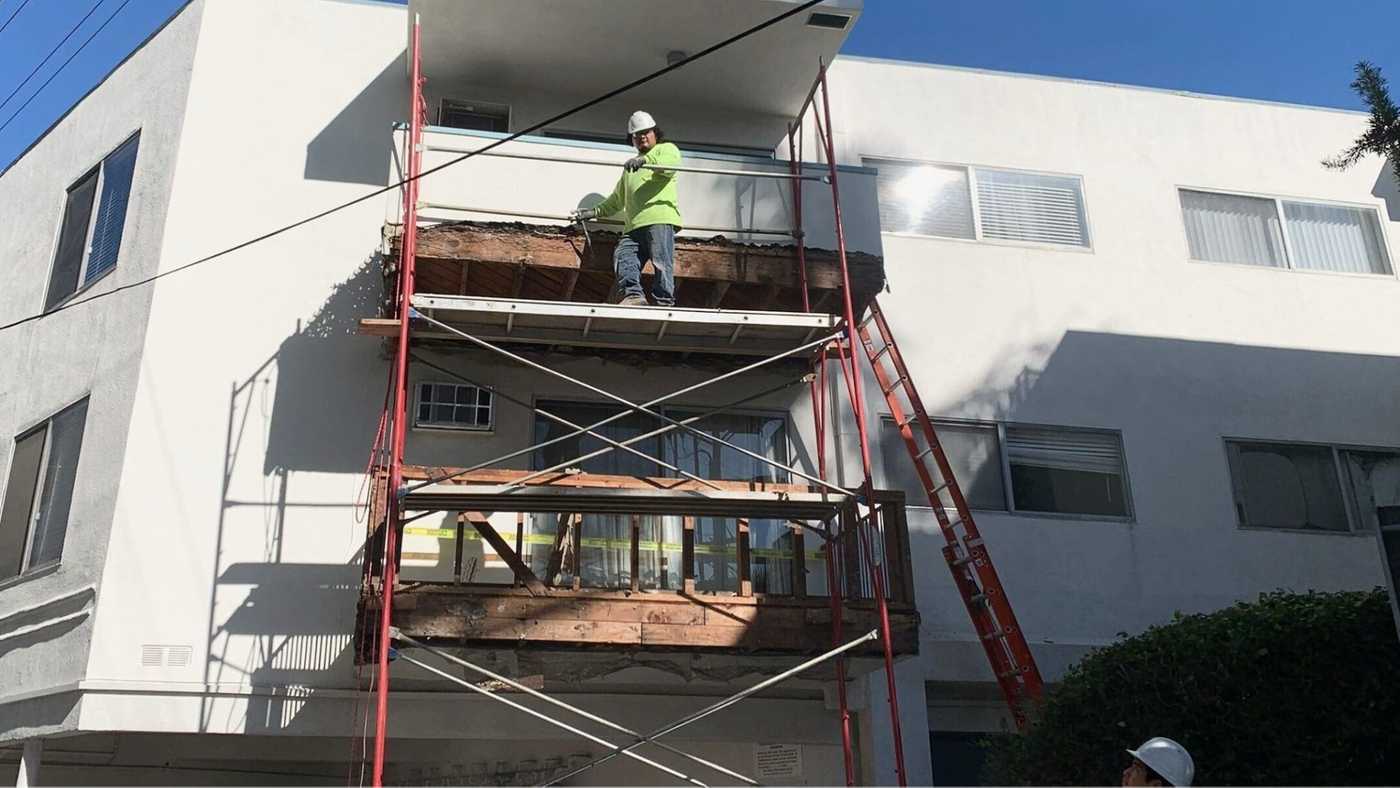
California’s SB-721 legislation has brought increased attention to the safety of exterior elevated elements such as balconies, decks, and walkways at multi-family properties. While many property owners and managers are now familiar with the inspection requirement, fewer understand what comes next.
An SB-721 inspection often reveals necessary repairs that must be addressed to maintain compliance, protect residents, and reduce long-term liability. This guide explains what SB-721 repairs involve, common issues uncovered during inspections, and how property managers can move forward with confidence.
What Is SB-721 and Why Repairs Matter
SB-721 applies to multi-family residential buildings with exterior elevated elements supported by wood or wood-based materials. The law requires periodic inspections to identify conditions that may pose a safety risk.
In many cases, inspections uncover deterioration that cannot be ignored. Once a condition is identified as a safety concern, repairs are no longer optional. Addressing these issues promptly helps protect occupants, preserve the asset, and demonstrate proactive property management.
Common Issues Found During SB-721 Inspections
Every property is different, but SB-721 inspections often reveal similar types of deficiencies. These include:
Wood Rot and Framing Deterioration
Moisture intrusion over time can compromise deck framing, joists, beams, and posts. Even surface-level damage may indicate deeper structural concerns.
Failed Waterproofing Systems
Cracked coatings, worn membranes, and improper drainage allow water to penetrate balcony and deck assemblies, accelerating deterioration.
Corroded or Compromised Metal Components
Rusting connectors, fasteners, and guardrail attachments can weaken the structural integrity of elevated elements.
Guardrail and Railing Deficiencies
Loose railings, deteriorated posts, or improper attachment methods may present immediate life-safety risks.
Stucco and Exterior Finish Damage
Cracks and failed sealants around balconies and walkways can allow water intrusion into structural components behind the finish.
Required Repairs vs Preventative Repairs
SB-721 inspection reports often include both required and recommended repairs.
Required repairs typically address life-safety concerns and must be corrected to remain compliant. These may include structural repairs, replacement of compromised framing, or immediate waterproofing corrections.
Preventative repairs focus on extending the life of the building and avoiding future failures. While not always mandatory, addressing these items early often reduces long-term repair costs and disruption.
Understanding this distinction helps property managers prioritize budgets and plan work efficiently.
What the SB-721 Repair Process Looks Like
Once an inspection report is received, the repair process generally follows these steps:
1. Review the Inspection Findings
The report outlines areas of concern, severity, and recommended corrective actions. Clear understanding of the scope is critical before moving forward.
2. Develop a Repair Scope
A qualified contractor translates inspection findings into a defined scope of work, including materials, methods, and sequencing.
3. Coordinate Access and Scheduling
Because most SB-721 repairs occur on occupied properties, careful planning is required to minimize resident disruption.
4. Address Permitting and Compliance
Depending on the scope, permits or engineer coordination may be required. Experienced contractors help navigate these requirements.
5. Complete Repairs and Documentation
Repairs are performed according to the approved scope, with documentation provided to support compliance and recordkeeping.
Why Choosing the Right SB-721 Repair Contractor Matters
SB-721 repairs are not typical maintenance projects. They require experience with:
-
Multi-family occupied properties
-
Structural and exterior repair work
-
Waterproofing systems
-
Coordination with inspectors and engineers
-
Safety protocols and access management
Selecting a contractor familiar with SB-721 requirements helps reduce delays, avoid scope gaps, and ensure repairs are completed correctly the first time.
How Whitestone Industries Supports SB-721 Repairs
Whitestone Industries provides comprehensive SB-721 repair services for apartment communities, condominiums, and HOA-managed properties throughout California.
Our team supports the full repair process, including:
-
Review of SB-721 inspection reports
-
Repair scope development
-
Structural wood repairs
-
Waterproofing and deck coating systems
-
Guardrail and metal component repairs
-
Stucco and exterior finish restoration
-
Final painting and surface protection
By offering multiple services under one roof, Whitestone Industries helps streamline scheduling, reduce coordination challenges, and deliver consistent results.
Plan Ahead and Stay Compliant
SB-721 repairs are an opportunity to address safety concerns while protecting the long-term value of your property. Acting promptly after an inspection helps reduce liability, prevent further damage, and maintain resident confidence.
If your property has recently completed an SB-721 inspection or is preparing for one, Whitestone Industries is available to help you evaluate next steps and develop a clear repair plan.