
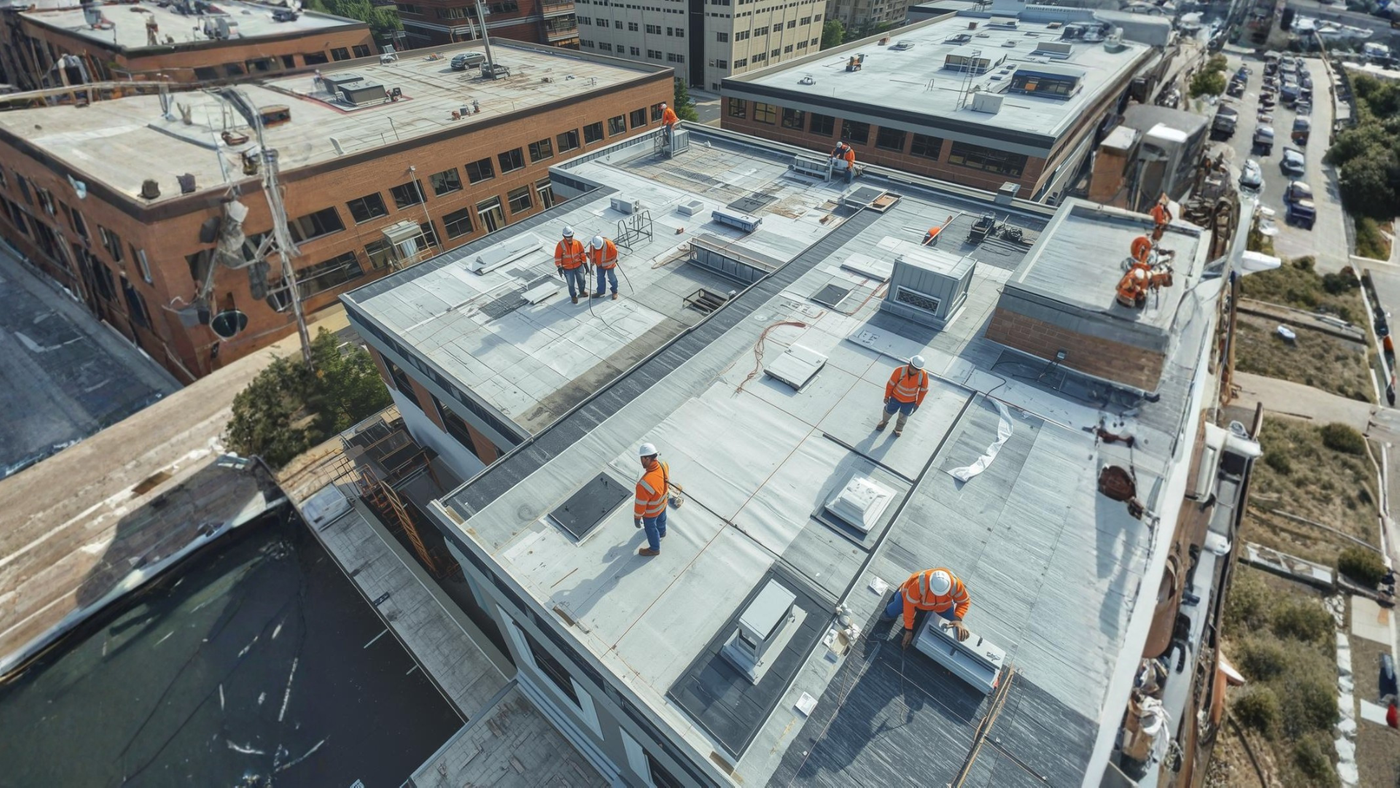
A commercial roof is one of the most critical components of any property. It protects the building, occupants, inventory, and operations below. Yet roofing systems are often overlooked until leaks or failures occur. Understanding the basics of commercial roofing helps property owners make smarter decisions, avoid costly disruptions, and extend the life of their investment.
This guide breaks down the fundamentals every property owner should know.
Common Types of Commercial Roofing Systems
Commercial roofs are designed differently than residential roofs. Most are flat or low-slope systems engineered for durability, drainage, and long-term performance.
The most common commercial roofing systems include:
-
TPO (Thermoplastic Polyolefin): Popular for energy efficiency and UV resistance
-
PVC Roofing: Highly durable and resistant to chemicals and grease
-
Modified Bitumen: Asphalt-based system ideal for high-traffic roofs
-
Built-Up Roofing (BUR): Multiple layers designed for long-term protection
-
Metal Roofing: Long lifespan and excellent weather resistance
Each system has advantages depending on building use, climate, foot traffic, and budget. Selecting the right roof is not about choosing the cheapest option but the most appropriate one for the building’s needs.
How Long Do Commercial Roofs Last?
A properly installed and maintained commercial roof can last anywhere from 15 to 40 years, depending on the material and conditions.
Typical lifespan ranges:
-
TPO or PVC roofs: 15 to 25 years
-
Modified bitumen: 20 to 30 years
-
Built-up roofing: 20 to 30 years
-
Metal roofing: 30 to 40+ years
Routine inspections and proactive repairs play a major role in reaching or exceeding these timelines.
Warning Signs Your Commercial Roof Needs Attention
Roof problems often start small and escalate quickly. Identifying issues early can prevent interior damage and business interruptions.
Common warning signs include:
-
Ponding or standing water
-
Cracked, blistered, or lifting membranes
-
Deteriorated flashing or sealants
-
Interior leaks or ceiling stains
-
Loose or exposed fasteners
-
Mold or moisture odors
Ignoring these signs can lead to structural damage, insulation failure, and costly emergency repairs.
The Importance of Commercial Roof Inspections
Regular roof inspections are essential for protecting your asset. Most manufacturers require inspections to maintain warranty coverage.
A professional commercial roof inspection typically includes:
-
Membrane and seam evaluation
-
Drainage and slope assessment
-
Flashing and penetration review
-
Identification of moisture intrusion
-
Documentation for budgeting and planning
Annual inspections and post-storm evaluations help property owners stay ahead of issues instead of reacting to emergencies.
Repair vs Replacement: Making the Right Call
Not every roof problem requires full replacement. In many cases, targeted repairs can significantly extend the life of a roof system.
Roof repair may be appropriate when:
-
Damage is localized
-
The roof is structurally sound
-
The system is within its service life
Roof replacement may be necessary when:
-
The roof has widespread failure
-
Repairs are recurring and costly
-
Moisture intrusion is extensive
-
The roof has exceeded its lifespan
A qualified contractor can help evaluate which option makes the most financial sense.
Why Proactive Roofing Saves Money
Reactive roofing is expensive. Emergency leaks often result in interior damage, lost productivity, tenant complaints, and unplanned capital expenses.
Proactive roofing management provides:
-
Predictable maintenance costs
-
Longer roof lifespan
-
Reduced emergency repairs
-
Improved building performance
-
Better long-term budgeting
A roof maintenance plan is one of the smartest investments a commercial property owner can make.
How Whitestone Industries Supports Commercial Roofing
Whitestone Industries provides commercial roofing inspections, repairs, and replacement services designed to protect properties and minimize disruption. Our team evaluates roofing systems holistically and provides clear recommendations based on condition, budget, and long-term goals.
Whether addressing an active issue or planning future capital improvements, we help property owners make informed decisions with confidence.
Final Thoughts
Understanding commercial roofing basics empowers property owners to protect their buildings, reduce risk, and plan ahead. With the right system, proper maintenance, and a trusted contractor, a commercial roof can perform reliably for decades.
If your property has not had a recent roof inspection or you are experiencing signs of wear, now is the time to take action.